Hydration
Signs of Dehydration You Shouldn't Ignore
From dark pee to afternoon headaches, here are the early signs of dehydration, the serious ones that need a doctor, and the quickest ways to rehydrate.

Dehydration doesn’t usually announce itself with a dramatic collapse. More often it’s a dull headache at 3pm, a bit of brain fog, or feeling weirdly wiped out after a perfectly normal day.
Most of the time it’s mild and easy to fix. But it’s worth knowing the signs, both the everyday ones and the few that mean you should get help.
Early signs of dehydration
According to the NHS, the most common signs in adults and children are:
- Feeling thirsty. Obvious, but easy to ignore when you’re busy.
- Dark yellow, strong-smelling pee. The single most useful check you can do.
- Peeing less often than usual, typically fewer than four times a day.
- A dry mouth, lips and tongue.
- Feeling tired or low on energy.
- Feeling dizzy or lightheaded, especially when you stand up quickly.
- Sunken eyes.
Lots of people also notice headaches and trouble concentrating. These overlap with plenty of other things, like poor sleep, skipping meals or too much screen time. That’s why the urine check is so handy: it’s specific.
The quick urine colour check
| Colour | What it usually means |
|---|---|
| Pale straw | You’re well hydrated |
| Light yellow | Fine |
| Dark yellow | Drink some water soon |
| Amber or honey | You’re likely dehydrated |
A couple of caveats: some vitamins (especially B vitamins) can turn urine bright yellow, and certain foods and medicines change the colour too.
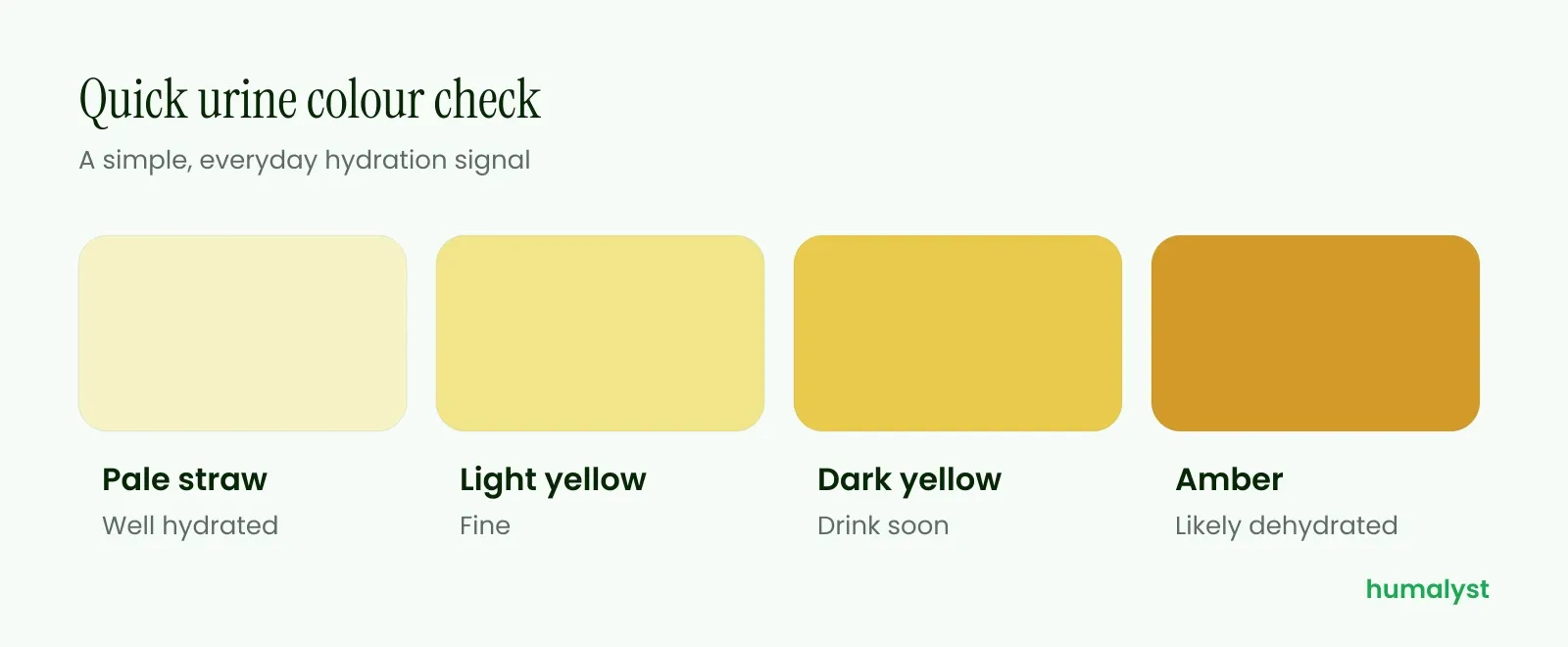
A quick urine colour check. Pale straw is the goal.
Who’s more at risk
Anyone can get dehydrated, but some people get there faster or notice it later:
- Babies and young children, because they’re small and lose fluid quickly when they’re ill.
- Older adults, because the thirst signal tends to weaken with age, and some medicines increase fluid loss.
- People with diarrhoea or vomiting, which can drain fluid and salts in hours.
- People exercising hard, particularly in heat or for a long time.
- People with diabetes, where high blood sugar can increase how much you pee.
- Anyone who’s simply very busy. It’s surprisingly common to just forget to drink.
Signs that need medical help
Mild dehydration is easy to fix at home. But get urgent medical advice (call your doctor, a non-emergency health line, or emergency services if it’s severe) if you or someone else:
- is confused, disoriented or unusually drowsy
- has a fast heartbeat or fast breathing
- hasn’t peed all day, or is a baby with very few wet nappies
- has vomiting or diarrhoea that won’t stop, or can’t keep fluids down
- is a baby with a sunken soft spot on top of their head
- has a seizure or faints
These can be signs of severe dehydration, which needs proper treatment, sometimes fluids through a drip.
How to rehydrate properly
For everyday, mild dehydration:
- Drink water in steady sips rather than downing a litre at once. Your body handles it better.
- Have something with a little salt if you’ve been sweating a lot. A snack or a meal is usually enough.
- Eat water-rich foods. Watermelon, cucumber, oranges, soup and yoghurt all count.
If you’ve been ill with vomiting or diarrhoea, oral rehydration solutions (sold in pharmacies) are the better choice. They contain the right balance of sugar and salts to help your body actually absorb the water. For babies and young children, check with a pharmacist or doctor on how much to give.
How to stop it happening again
Dehydration is mostly a habit problem, not a knowledge problem. We all know we should drink water. The fixes are boring but they work:
- Know your number. Your needs depend on your weight, activity and climate. Here’s how to work out how much water you need.
- Spread it through the day. Drinking most of your water after 6pm just means a disrupted night.
- Anchor it to routines you already have, like meals, coffee or meetings. Habit stacking makes this almost automatic.
- Use gentle reminders. Humalyst spaces water reminders across your waking hours and eases off once you’ve hit your goal.
The bottom line
Thirst, dark urine and that heavy, foggy afternoon feeling are your body’s early warning system. Most dehydration is mild and fixed with a few glasses of water. But confusion, a racing heart, no urine all day, or a sick baby with few wet nappies need medical attention straight away.
Quick answers
What are the first signs of dehydration?
Common early signs are feeling thirsty, dark yellow or strong-smelling urine, peeing less often than usual, a dry mouth, tiredness, and feeling dizzy or lightheaded.
How quickly can you rehydrate?
Mild dehydration usually improves within an hour or two of drinking fluids. If you've been vomiting or had diarrhoea, an oral rehydration solution helps replace lost salts as well as water.
When is dehydration an emergency?
Get urgent medical help if someone is confused or very drowsy, has a fast heartbeat, hasn't peed all day, has a seizure, or if a baby has a sunken soft spot on their head or very few wet nappies.
Sources
This article is general information, not medical advice. If you have a health condition, are pregnant, or are making a big change to how you eat or drink, talk to a doctor or registered dietitian first.
Keep reading
 HydrationHow Much Water Should I Drink a Day? (By Weight)Forget the one-size 8 glasses rule. Here's how much water you actually need based on your weight, activity and climate, with simple maths you can do.
 Habits & moodHow to Build Healthy Habits That Actually StickForget the 21-day myth. Here's what research says about how long habits take to form, and six practical ways to make healthy habits stick for good.
 Habits & moodThe Benefits of Mood Tracking (and How to Start)A 10-second daily check-in can reveal what lifts or drains you. Here's why mood tracking helps, what the research says and how to start without overthinking.