Habits & mood
How to Build Healthy Habits That Actually Stick
Forget the 21-day myth. Here's what research says about how long habits take to form, and six practical ways to make healthy habits stick for good.

Every January, millions of people decide this is the year they’ll drink more water, eat better and move more. By February, most of those plans have quietly faded.
It’s not a willpower problem. It’s a design problem. Habits that stick are usually small, specific and attached to something you already do. Here’s what the research says, and how to use it.
How long does a habit really take?
You’ve probably heard “21 days to form a habit”. That figure doesn’t come from habit research. It traces back to a 1960s self-help book.
The best-known real-world study, led by Phillippa Lally at University College London, followed people trying to build a new daily habit, things like eating a piece of fruit with lunch or going for a run before dinner. On average, it took 66 days for the behaviour to feel automatic. But the range was huge: from 18 to 254 days.
Two encouraging findings came out of that study:
- Simpler habits formed faster. Drinking a glass of water became automatic much sooner than doing 50 sit-ups.
- Missing one day didn’t derail anything. What mattered was carrying on.
So if you’re three weeks in and it still feels like effort, nothing’s wrong. You’re right on schedule.
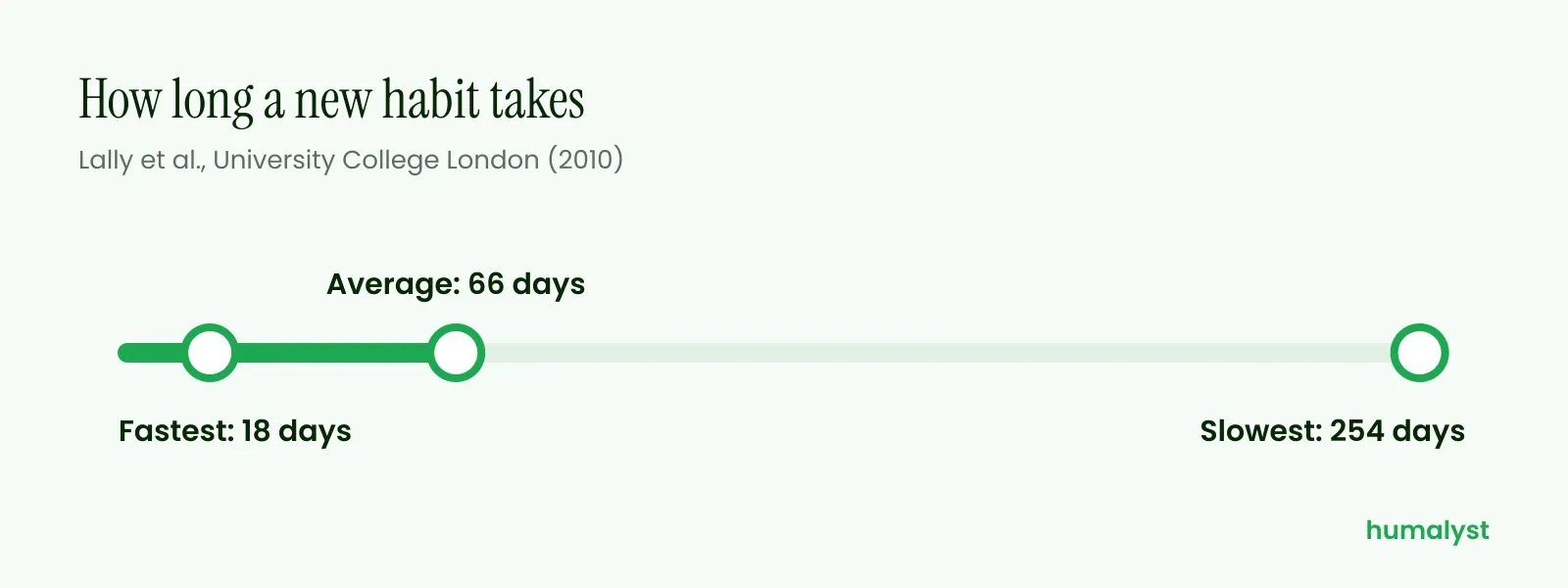
In Lally’s study, habits took anywhere from 18 to 254 days to feel automatic, with an average of 66.
Six ways to make healthy habits stick
1. Start smaller than feels worthwhile
The biggest mistake is starting with the end goal. “Drink 3 litres of water a day” is an outcome. “Drink a glass of water when I sit down at my desk” is a habit.
Pick a version so small you couldn’t possibly fail: one glass of water, a two-minute walk, one portion of veg at dinner. Once it’s automatic, build on it.
2. Attach it to something you already do
This is often called habit stacking. You use an existing routine as the trigger for the new one:
- After I pour my morning coffee, I’ll drink a glass of water.
- After I park the car, I’ll take the stairs.
- After I brush my teeth at night, I’ll log how my day felt.
Your existing habits already fire automatically. Hooking onto them saves you from having to remember.
3. Make an “if–then” plan
Psychologists call these implementation intentions: a specific plan for when and where you’ll act. A large analysis of 94 independent tests by Peter Gollwitzer and Paschal Sheeran found that people who made these plans were noticeably more likely to follow through.
It’s simple: “If it’s 1pm on a weekday, then I’ll walk around the block before lunch.” The more specific, the better.
4. Make the good choice the easy choice
Your environment beats your willpower every time.
- Want to drink more water? Keep a filled bottle on your desk.
- Want to snack better? Put fruit on the counter and the biscuits in a high cupboard.
- Want to exercise in the morning? Lay your kit out the night before.
5. Track it, lightly
Seeing a streak or a filling chart is quietly motivating. Tracking also turns vague feelings (“I think I’m drinking more”) into something concrete.
Keep it light, though. One tap is fine; a 10-minute daily log isn’t. That’s why Humalyst keeps water, mood and meal logging to a tap or a photo, so the tracking doesn’t become a second job.
6. Never miss twice
You’ll miss days. Everyone does. Lally’s study suggests a single slip doesn’t matter much. The danger is when one missed day becomes three, then a week. A simple rule many coaches use: missing once is an accident; missing twice is the start of a new habit. Just get back on the next day.
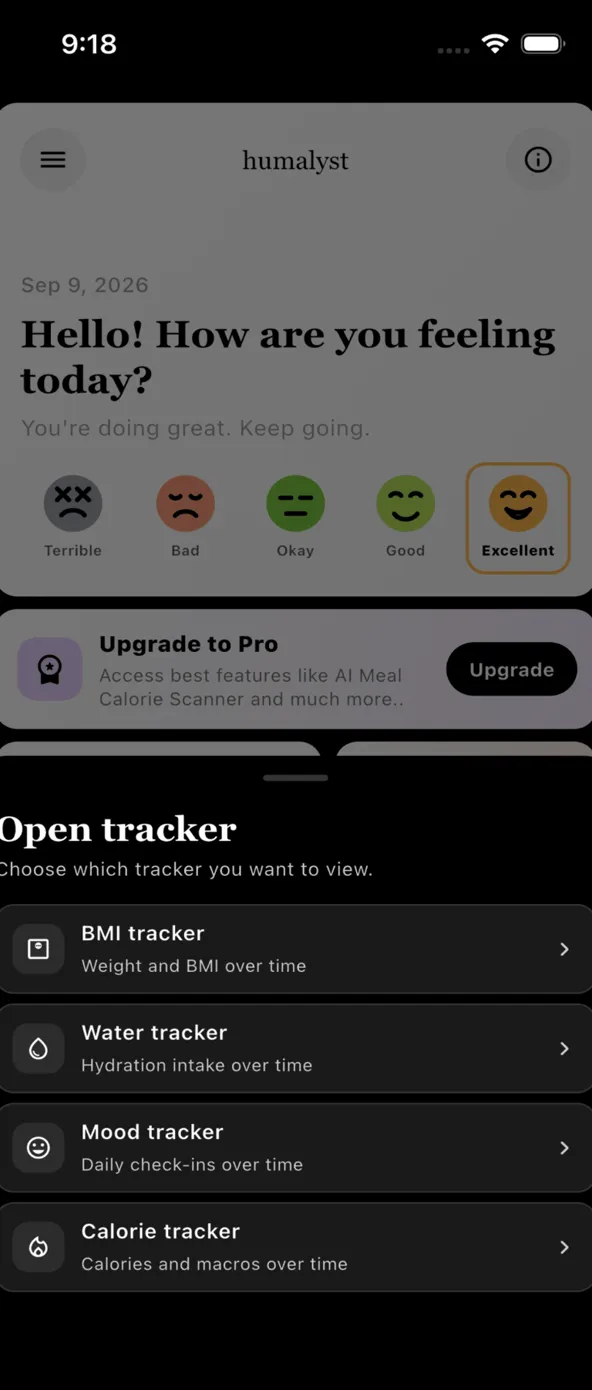
Light tracking, one tap at a time, keeps habits visible without becoming a chore.
A simple starter plan
If you want somewhere to begin, try picking just one of these for the next month:
| Habit | Anchor it to |
|---|---|
| Drink a glass of water | Your first coffee or tea |
| Add one portion of vegetables | Dinner |
| Walk for 10 minutes | Lunch break |
| Rate your mood from 1 to 5 | Brushing your teeth at night |
| Check your BMI and weight | First Monday of each month |
One habit at a time. Once it runs on autopilot, add the next.
The bottom line
Habits stick when they’re small, specific, attached to something you already do and easy to keep track of. Expect it to take a couple of months, don’t panic over a missed day, and build slowly. If hydration is your first target, start with how much water you actually need. If it’s your headspace, read about the benefits of mood tracking.
Quick answers
How long does it take to form a habit?
It varies a lot. A well-known University College London study found it took an average of 66 days for a new behaviour to become automatic, with a range from 18 to 254 days depending on the person and the habit.
What happens if I miss a day?
In the same study, missing a single day didn't meaningfully affect habit formation. What matters is getting back on track quickly rather than being perfect.
What is habit stacking?
Habit stacking means attaching a new habit to something you already do every day, for example drinking a glass of water right after you brush your teeth.
Sources
This article is general information, not medical advice. If you have a health condition, are pregnant, or are making a big change to how you eat or drink, talk to a doctor or registered dietitian first.
Keep reading
 Habits & moodThe Benefits of Mood Tracking (and How to Start)A 10-second daily check-in can reveal what lifts or drains you. Here's why mood tracking helps, what the research says and how to start without overthinking.
 HydrationHow Much Water Should I Drink a Day? (By Weight)Forget the one-size 8 glasses rule. Here's how much water you actually need based on your weight, activity and climate, with simple maths you can do.
 NutritionHow to Count Calories Accurately (Without Losing Your Mind)Most people underestimate what they eat. These nine practical habits make calorie counting more accurate, from food scales to cooking oil to eating out.