Habits & mood
The Benefits of Mood Tracking (and How to Start)
A 10-second daily check-in can reveal what lifts or drains you. Here's why mood tracking helps, what the research says and how to start without overthinking.

Most of us can say exactly how many steps we did yesterday, but would struggle to say how we actually felt last Tuesday. Mood is one of those things we assume we’ll remember, and then don’t.
That’s what makes mood tracking surprisingly useful. Not as a deep therapeutic exercise, but as a quick daily check-in that, over a few weeks, starts showing you things you hadn’t noticed.
What mood tracking actually is
At its simplest, it’s rating how you feel once a day. That might be on a scale from 1 to 5, or picking from a handful of faces, plus an optional line about what happened.
That’s it. No journal essays, no complicated questionnaires. The value isn’t in any single entry. It’s in the pattern that builds up over time.
The real benefits
1. You start to see patterns
This is the big one. After a few weeks, you might notice things like:
- Your mood dips on days you sleep less than seven hours.
- Sunday evenings are reliably rough.
- You feel better on days you walked outside, even briefly.
- Afternoons are worse when you’ve barely had any water. (Mild dehydration really can affect mood and concentration; see the signs of dehydration.)
You can’t fix a pattern you can’t see. Tracking makes it visible.
2. Naming feelings can take the edge off them
There’s interesting research behind this. In a 2007 brain imaging study, psychologist Matthew Lieberman and colleagues found that simply putting feelings into words, which they called “affect labeling”, reduced activity in the amygdala, a part of the brain involved in emotional reactions.
It’s one study, and it doesn’t mean a mood app is therapy. But it does suggest that the small act of pausing to name what you’re feeling isn’t nothing.
3. You notice progress you’d otherwise miss
When you’re having a hard week, it’s easy to feel like you’ve always felt this way. A mood history gives you something more accurate to look back on: you can see that last month had plenty of good days, or that things have been slowly improving.
4. Better conversations with professionals
If you ever talk to a GP, counsellor or therapist, “I’ve been feeling a bit down lately” is hard to work with. “My mood has been 2 out of 5 on most days for three weeks, and it’s worse after work” is much more useful. Your log becomes a clear, honest record.
5. It nudges other healthy habits
Tracking mood alongside things like water, food and activity helps you connect the dots between your body and your head. Many people find that seeing those links is the motivation they needed to sleep earlier or move more.
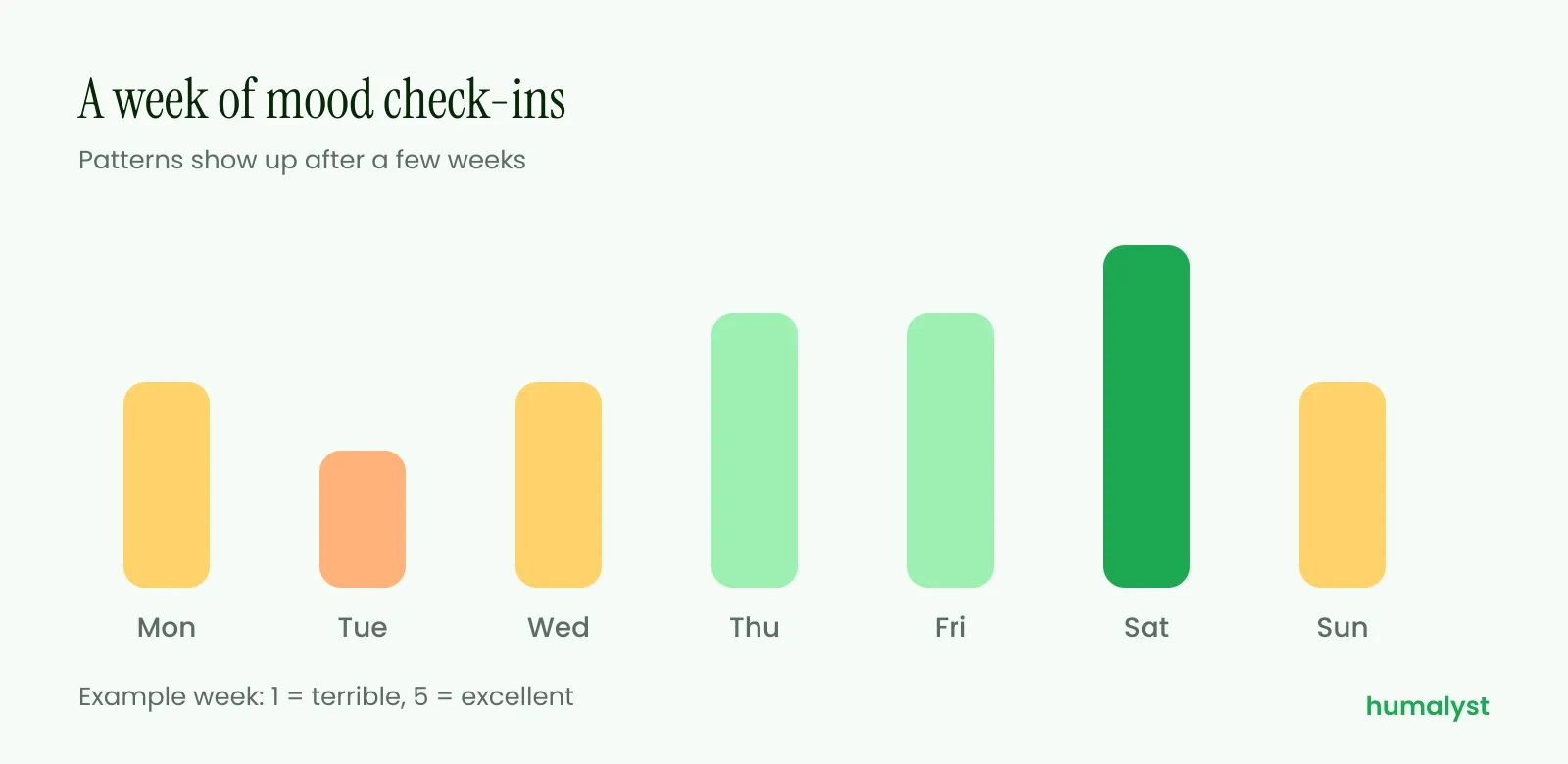
An example week of mood check-ins. Patterns like a midweek dip get clearer over time.
How to start (without overthinking it)
- Pick a time. Before bed works well, because you’ve got the whole day to reflect on. Attach it to something you already do, like brushing your teeth. (That’s habit stacking.)
- Keep the scale simple. Five options is plenty: terrible, bad, okay, good, excellent.
- Add a word or two, if you like. “Slept badly”, “great walk”, “stressful meeting”. Optional, but it makes patterns easier to read later.
- Review once a week. Spend two minutes scrolling back. Look for what your good days have in common.
- Don’t judge the entries. A “bad” day isn’t a failure. It’s just data.
Humalyst puts a five-face mood check-in right on the home screen, so it takes a single tap, and shows your mood over days, weeks and months in the tracker.
A few honest caveats
Mood tracking isn’t right for everyone, all the time.
- If it makes you more anxious, or you find yourself obsessing over the numbers, take a break. It’s a tool, not an obligation.
- It isn’t a diagnosis. A mood app can’t tell you whether you have depression or anxiety.
- It’s not a substitute for support. If you’ve felt low, hopeless or lost interest in things you usually enjoy for most of the day, nearly every day, for more than two weeks, the NHS recommends speaking to a GP. If you’re struggling to cope or thinking about harming yourself, please contact your doctor, a local crisis line or emergency services straight away. You don’t have to handle it alone.
The bottom line
A quick daily mood check-in costs you about ten seconds. Over a few weeks it can show you what lifts you up and what drags you down, help you name what you’re feeling, and give you a clearer picture to share if you ever need support. Keep it simple, review weekly and be kind to yourself about the low days.
Quick answers
What are the benefits of tracking your mood?
Mood tracking helps you spot patterns, such as how sleep, food, exercise or certain situations affect how you feel. It can make emotions easier to name and manage, and gives you clear notes to share with a doctor or therapist.
How often should I track my mood?
Once a day is plenty for most people. Doing it at the same time each day, like before bed, makes it easier to compare days and spot trends.
Can a mood tracker diagnose depression or anxiety?
No. Mood tracking is a self-awareness tool, not a diagnosis. If you've felt low most days for more than two weeks, or you're struggling to cope, please talk to a doctor.
Sources
This article is general information, not medical advice. If you have a health condition, are pregnant, or are making a big change to how you eat or drink, talk to a doctor or registered dietitian first.
Keep reading
 Habits & moodHow to Build Healthy Habits That Actually StickForget the 21-day myth. Here's what research says about how long habits take to form, and six practical ways to make healthy habits stick for good.
 HydrationSigns of Dehydration You Shouldn't IgnoreFrom dark pee to afternoon headaches, here are the early signs of dehydration, the serious ones that need a doctor, and the quickest ways to rehydrate.
 HydrationHow Much Water Should I Drink a Day? (By Weight)Forget the one-size 8 glasses rule. Here's how much water you actually need based on your weight, activity and climate, with simple maths you can do.