Nutrition
How to Count Calories Accurately (Without Losing Your Mind)
Most people underestimate what they eat. These nine practical habits make calorie counting more accurate, from food scales to cooking oil to eating out.
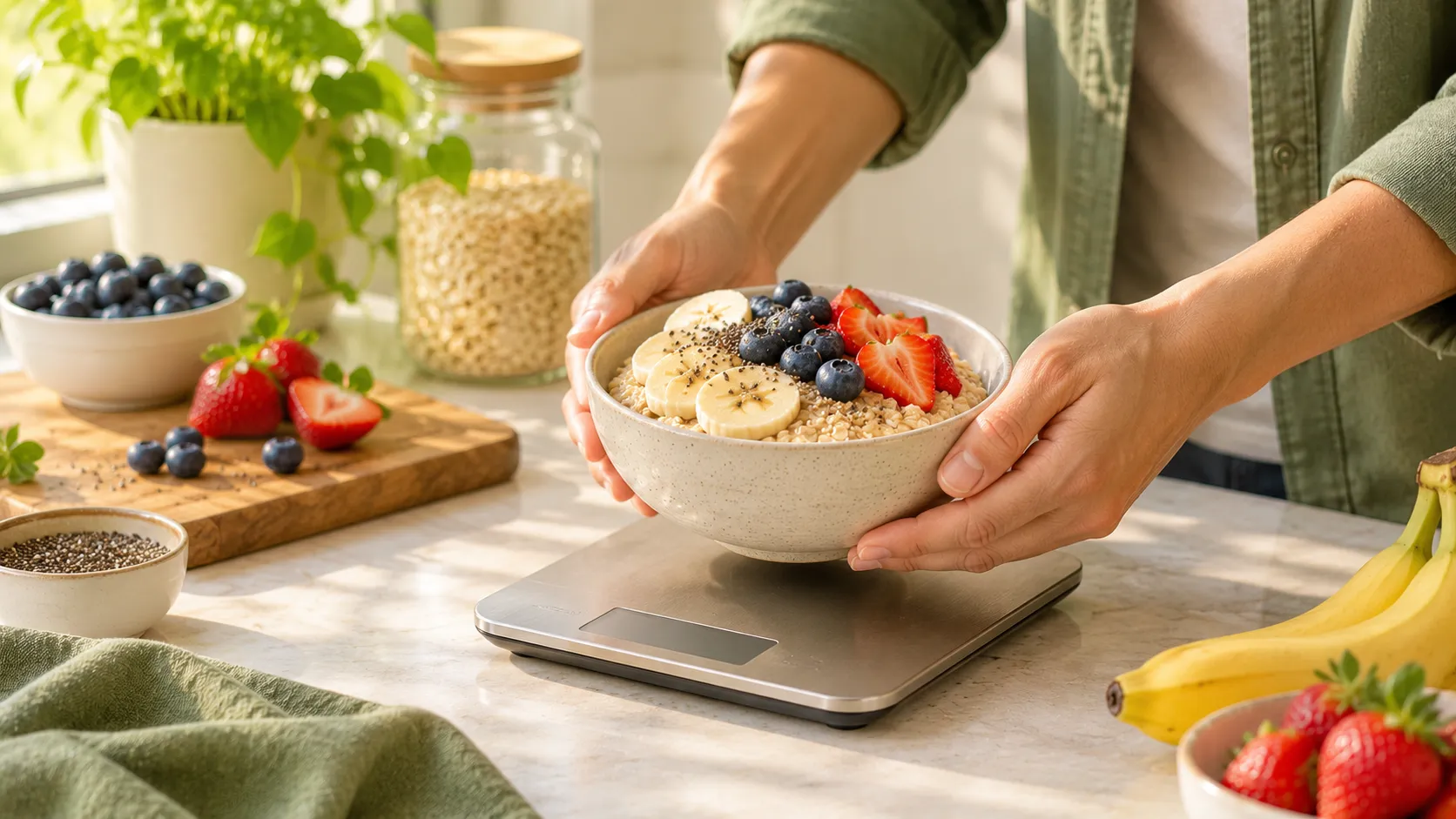
Calorie counting has a reputation for being tedious and a bit obsessive. Done badly, it’s both. Done well, it’s a short-term learning tool that teaches you more about your eating in two weeks than years of guessing.
The problem is that most of us are bad at estimating. Research going back decades shows people regularly underestimate how much they eat. Not because they’re lying, but because portions are deceptive and small extras slip past unnoticed.
Here’s how to count more accurately without it taking over your life.
1. Get a cheap kitchen scale (and use it for two weeks)
This is the single biggest upgrade. “A bowl of pasta” can be 60 g or 160 g of dry pasta. That’s a difference of over 350 calories.
You don’t need to weigh everything forever. Weigh the foods you eat most often for a couple of weeks. After that, you’ll eyeball portions far more accurately.
2. Watch the cooking fat
Oil is the most commonly missed calorie in home cooking. One tablespoon of olive oil is about 120 calories, according to USDA data, and it’s very easy to pour two or three without noticing.
Measure oil with a spoon, or use a spray. Same goes for butter in the pan and dressing on the salad.
3. Match raw or cooked, and be consistent
Rice, pasta, meat and vegetables all change weight when cooked. Rice and pasta absorb water and get heavier; meat loses water and gets lighter.
It doesn’t matter which you pick. What matters is that your database entry matches what you weighed. “Chicken breast, raw” and “chicken breast, cooked” have very different numbers per 100 g.
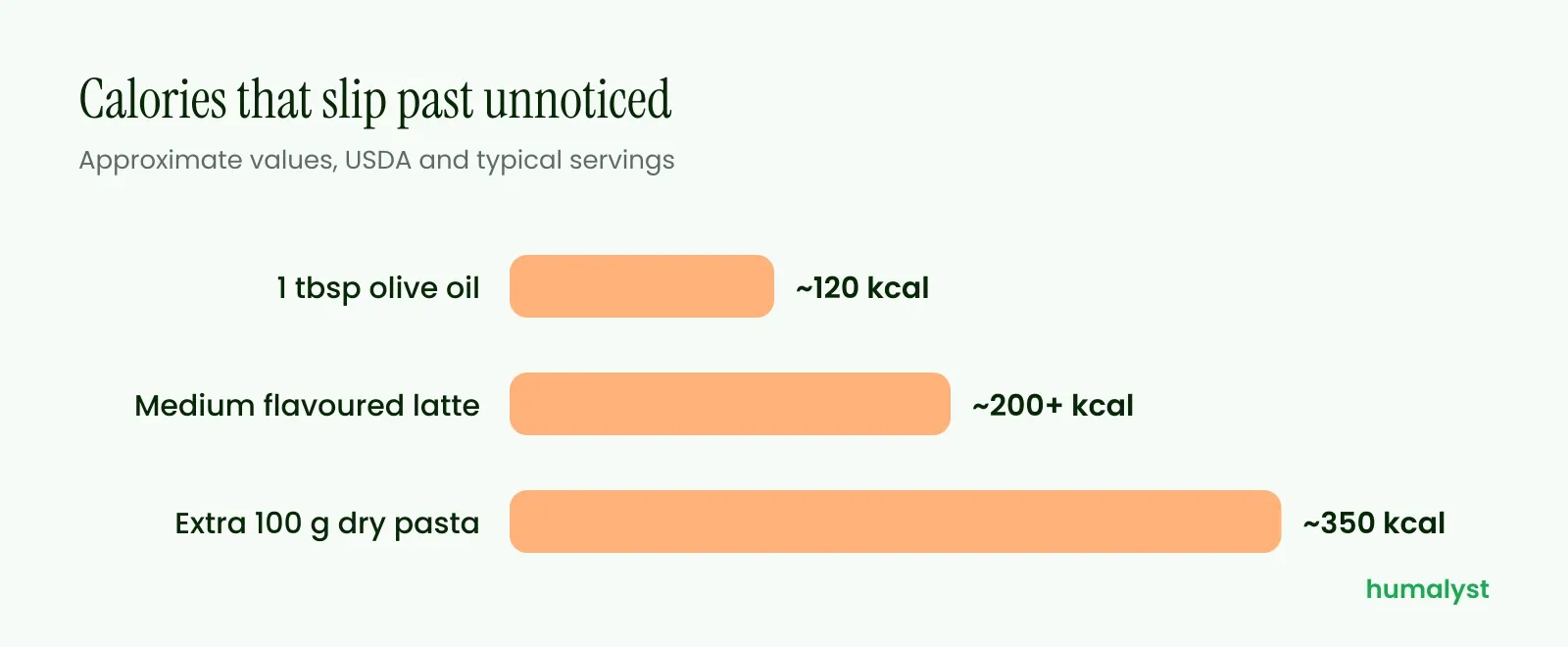
Small, easy-to-miss extras add up quickly.
4. Don’t forget drinks
Lattes, juice, smoothies, alcohol and fizzy drinks can add hundreds of calories a day. They also don’t fill you up the way food does, which makes them easy to overdo.
A medium flavoured latte can easily top 200 calories. That’s worth knowing even if you don’t change anything.
5. Log the bites, licks and tastes
The crust off your kid’s toast. Two biscuits in a meeting. A handful of nuts while cooking. None of these feel like “eating”, but they add up. You don’t need to be precise. Just log something. A rough entry beats a blank one.
6. Use a reliable database
Many apps let anyone add foods, so you’ll find five different entries for the same thing with wildly different numbers. Prefer entries from official sources. USDA FoodData Central is one of the most thorough public nutrition databases, and it’s what Humalyst’s meal scanner uses for its nutrition numbers.
7. Accept that labels aren’t perfect
Food labels are good estimates, not lab measurements. Regulators allow some margin of error: in the US, values can often be off by up to around 20% and still be legal. That’s another reason to judge your progress by trends over weeks, not by exact daily totals.
8. Have a plan for eating out
Restaurant meals are the hardest to estimate. Chefs use more fat and bigger portions than you would at home. A few tricks:
- Log the closest match you can find, then add 10–20% to be safe.
- Look up the chain’s published nutrition info when it’s available.
- Snap a photo. Humalyst’s AI meal scanner identifies each food on your plate, estimates portions and pulls the nutrition from USDA data. It won’t be perfect, but it’s a far better estimate than a guess, and you can adjust it.
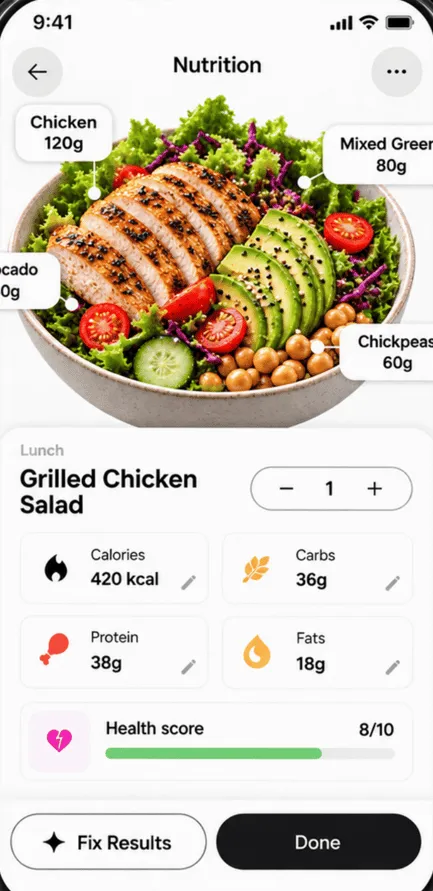
Humalyst’s AI meal scanner identifies each food and pulls nutrition from USDA data. You can adjust the result before saving it.
9. Think in weekly averages
One high day doesn’t undo a good week. If your goal is 1,800 a day, a week totalling around 12,600 is what counts. Looking at averages takes the pressure off individual days and makes the whole thing feel a lot less punishing.
When to stop counting
Calorie counting is a tool, not a lifestyle. Once you’ve got a feel for portions, many people move to:
- tracking only weekdays, or only new foods
- tracking for one week a month as a check-in
- not tracking at all, and just using what they’ve learned
If counting starts to make you anxious, or feels like it’s controlling you rather than helping, step back. That’s a sign it’s not the right tool for you right now, and that’s completely fine.
The bottom line
Accurate calorie counting comes down to a few habits: weigh your staples for a couple of weeks, measure oil, log drinks and nibbles, use trustworthy data, and look at weekly averages. Do that and your numbers will be close enough to actually be useful. Pair them with the right target from our guide on how many calories you need to lose weight.
Quick answers
Should I weigh food raw or cooked?
Either works as long as you match it to the right database entry. Raw weights are usually more consistent, because cooking changes how much water food holds.
Are food label calories accurate?
They're close, but not exact. In the US, label values are allowed some margin of error, often up to around 20 percent, so treat them as good estimates rather than precise figures.
Do I have to count calories forever?
No. Many people track carefully for a few weeks to learn portion sizes, then switch to tracking loosely or only on certain days.
Sources
This article is general information, not medical advice. If you have a health condition, are pregnant, or are making a big change to how you eat or drink, talk to a doctor or registered dietitian first.
Keep reading
 NutritionHow Many Calories Should I Eat to Lose Weight?Work out your maintenance calories, pick a safe deficit and see what that means in real numbers. A step-by-step guide without the crash-diet nonsense.
 NutritionHow Much Protein Do You Need Per Day?The 0.8 g/kg rule is a minimum, not a target. Here's how much protein you need per day by weight, age and goal, plus what that looks like on a plate.
 Habits & moodHow to Build Healthy Habits That Actually StickForget the 21-day myth. Here's what research says about how long habits take to form, and six practical ways to make healthy habits stick for good.