Nutrition
How Much Protein Do You Need Per Day?
The 0.8 g/kg rule is a minimum, not a target. Here's how much protein you need per day by weight, age and goal, plus what that looks like on a plate.
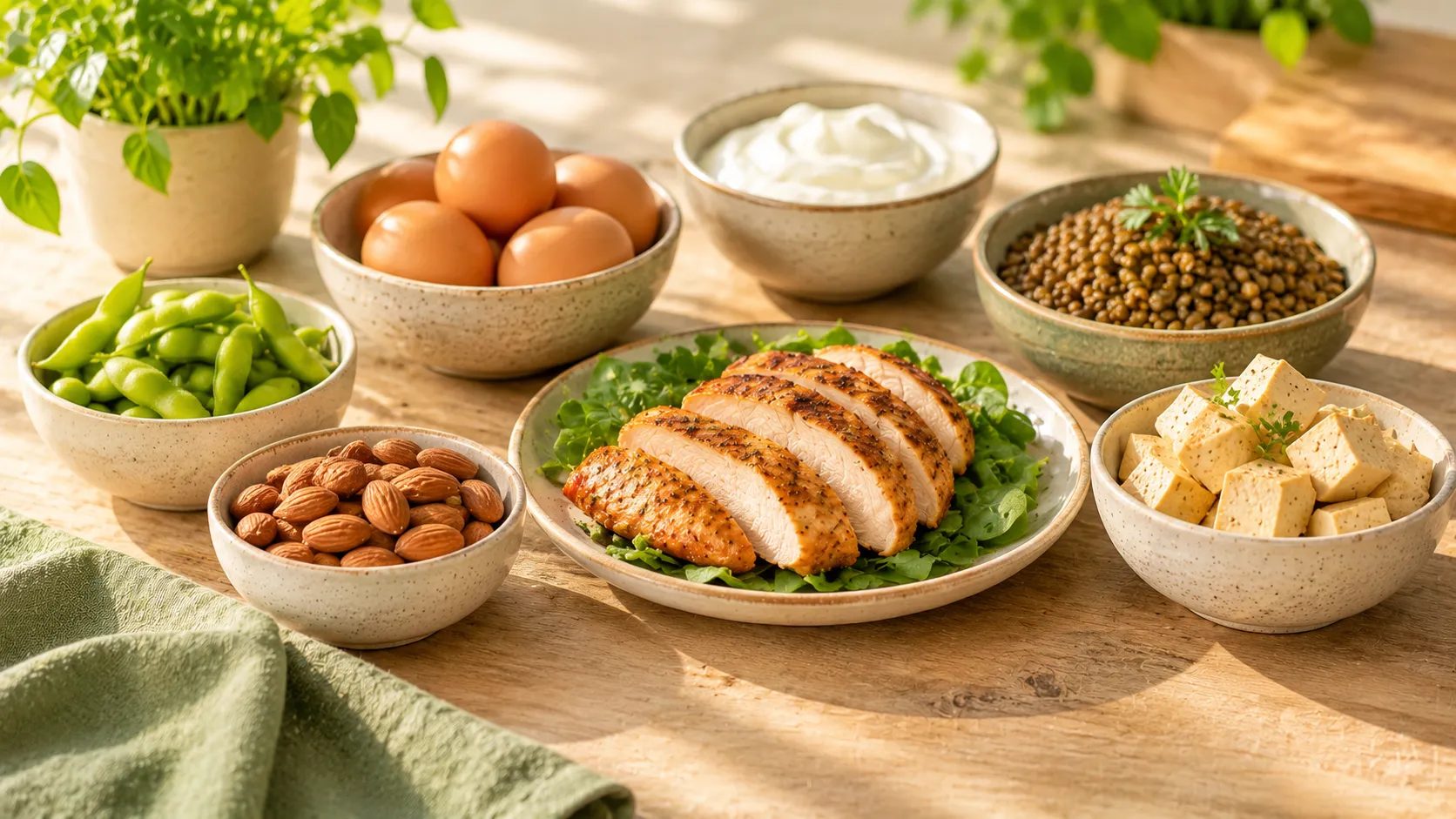
Protein advice online tends to swing between two extremes: “you barely need any” and “eat a chicken breast every two hours”. The truth is somewhere sensible in the middle, and it depends on who you are and what you’re trying to do.
The baseline: 0.8 g per kg
The official recommended intake for healthy adults, set by the US National Academies, is 0.8 grams of protein per kilogram of body weight per day.
- 60 kg person: about 48 g a day
- 75 kg person: about 60 g a day
- 90 kg person: about 72 g a day
Here’s the thing most people miss: that number is designed to prevent deficiency in almost everyone. It’s a floor, not a target. Plenty of people benefit from more.
When you probably need more
| Situation | Suggested range |
|---|---|
| Healthy adult, not very active | 0.8 – 1.0 g/kg |
| Regular exercise or strength training | 1.4 – 2.0 g/kg |
| Losing weight (to protect muscle) | 1.2 – 2.0 g/kg |
| Adults over 65 | 1.0 – 1.2 g/kg |
Where those numbers come from:
- If you train, the International Society of Sports Nutrition recommends 1.4–2.0 g/kg to build and maintain muscle.
- If you’re losing weight, higher protein helps you hold on to muscle while you’re in a calorie deficit, and it keeps you fuller.
- If you’re older, an expert group known as PROT-AGE recommends 1.0–1.2 g/kg, because muscle becomes harder to maintain with age.
A worked example
Say you weigh 70 kg, you go to the gym three times a week, and you’d like to lose a bit of fat.
- Baseline: 70 × 0.8 = 56 g (the minimum)
- A good target: 70 × 1.6 = about 110 g a day
That sounds like a lot until you split it up: roughly 30 g at breakfast, 35 g at lunch, 35 g at dinner and a 10 g snack.
What 30 grams of protein looks like
Approximate figures, based on USDA data:
| Food | Portion | Protein |
|---|---|---|
| Chicken breast, cooked | 100 g | ~31 g |
| Canned tuna, drained | 100 g | ~25 g |
| Greek yoghurt, plain | 200 g pot | ~20 g |
| Lentils, cooked | 1 cup (about 200 g) | ~18 g |
| Firm tofu | 100 g | ~15–17 g |
| Eggs | 2 large | ~12 g |
| Milk | 250 ml glass | ~8 g |
| Peanut butter | 2 tablespoons | ~7 g |
A few easy combinations that land around 30 g:
- 2 eggs on toast plus a Greek yoghurt
- A tuna sandwich with a glass of milk
- A lentil and tofu curry with rice
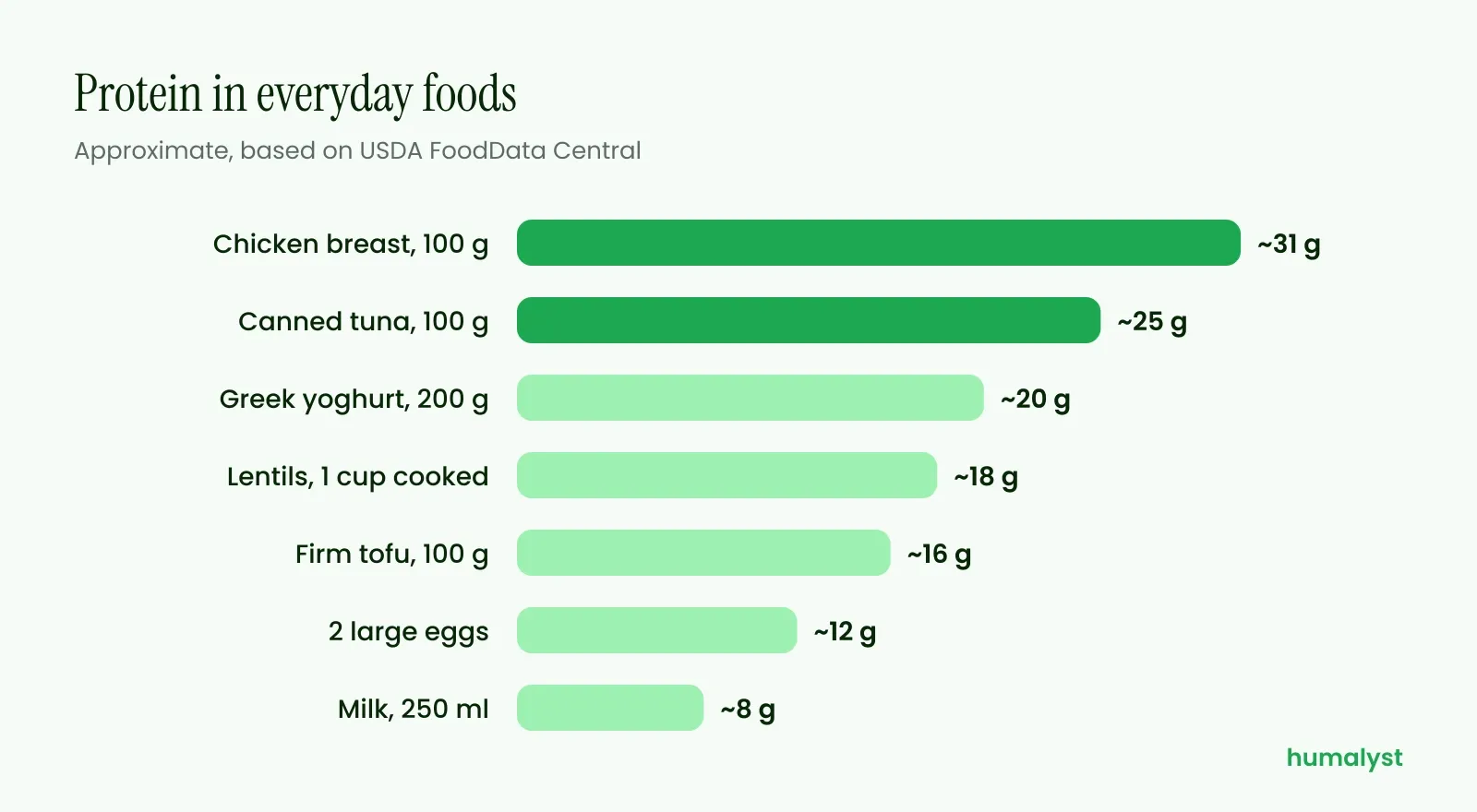
Approximate protein in everyday foods, based on USDA FoodData Central.
Spread it out
You’ll often hear that your body “can only absorb 30 g at a time”. That isn’t quite right. You digest all of it. But for building muscle, research suggests spreading protein over three or four meals, with about 20–40 g per meal, works better than cramming most of it into dinner.
Most people eat a light-protein breakfast (toast, cereal, coffee) and a heavy-protein dinner. Simply moving some protein to the morning is one of the easiest upgrades you can make.
Plant-based? You’re fine
You can absolutely hit your protein target without meat. Lentils, beans, chickpeas, tofu, tempeh, edamame, seitan, nuts, seeds and soy milk all pull their weight. Mixing different sources across the day covers all the essential amino acids, so there’s no need to combine them at every meal.
Can you have too much?
For healthy people, intakes up to around 2 g per kg appear to be safe. Beyond that there’s little extra benefit for most of us, and those calories might be better spent on fibre-rich carbs and healthy fats.
If you have kidney disease, talk to your doctor before increasing your protein. Your needs may be quite different.
The bottom line
0.8 g per kg is the minimum. If you’re active, trying to lose fat or getting older, aim for somewhere between 1.0 and 2.0 g per kg, and spread it across your meals. If you’re tracking food anyway, Humalyst shows your protein next to calories, carbs and fat, so you can see at a glance whether you’re close. For the calorie side of things, see how many calories to eat to lose weight.
Quick answers
How much protein do I need per day?
The baseline for healthy adults is 0.8 g per kg of body weight. Active people, people losing weight and older adults often benefit from more, usually somewhere between 1.0 and 2.0 g per kg.
How much protein can your body use in one meal?
Your body digests all the protein you eat. For building muscle, research suggests spreading it across meals, with roughly 20 to 40 g per meal, works well for most people.
Is a high-protein diet safe?
For healthy people, protein intakes up to about 2 g per kg appear safe. If you have kidney disease, talk to your doctor before increasing protein.
Sources
This article is general information, not medical advice. If you have a health condition, are pregnant, or are making a big change to how you eat or drink, talk to a doctor or registered dietitian first.
Keep reading
 NutritionHow Many Calories Should I Eat to Lose Weight?Work out your maintenance calories, pick a safe deficit and see what that means in real numbers. A step-by-step guide without the crash-diet nonsense.
 NutritionHow to Count Calories Accurately (Without Losing Your Mind)Most people underestimate what they eat. These nine practical habits make calorie counting more accurate, from food scales to cooking oil to eating out.
 BMI & weightIs BMI Accurate? What It Gets Right (and Wrong)BMI is a useful screening tool, but it can't tell muscle from fat. Here's when it's reliable, when it isn't, and two simple checks that add real context.